
KZN Navigates Dual Threat: Post-Election Unrest & Festive Season Security Surge
SecurIntel South Africa analyzes KZN's evolving security landscape: election unrest, road disruptions, and intensified festive season operations. Understand the
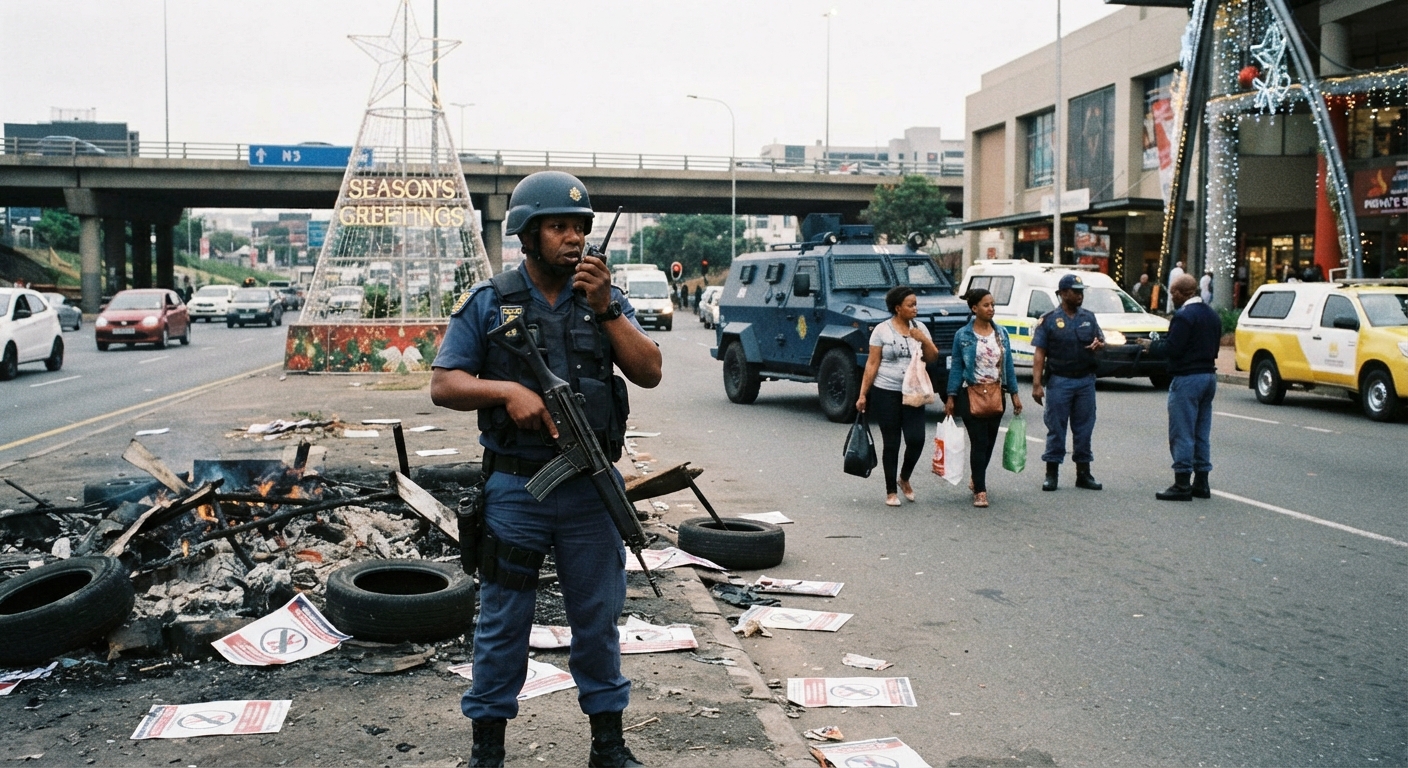
The KwaZulu-Natal province is currently a crucible of converging security challenges, presenting a complex operational environment for private security firms and a heightened risk profile for businesses and homeowners. From politically-charged road blockades to intensified law enforcement operations targeting reckless driving ahead of the festive season, the landscape demands increased vigilance and strategic preparedness from South Africa's security sector.
Unrest Echoes: Jozini Blockades and Business Impact
The disruption along the P522 Machini road in Jozini, where members of a political party allegedly barricaded routes in protest over local election results, serves as a stark reminder of how political volatility can directly impact commercial operations and public safety. Such incidents not only halt traffic and disrupt supply chains but also create potential vulnerabilities for businesses. Private security response teams often find themselves at the forefront of managing these localised disturbances, either by securing premises adjacent to protest sites, facilitating safe passage where possible, or coordinating with public law enforcement to mitigate risk. The immediate threat extends beyond mere inconvenience, encompassing potential for opportunistic crime or damage to property if protests escalate without adequate containment.
Road Safety Operations Intensify: A Broader Security Picture
As KZN gears up for the busy festive season, the KwaZulu-Natal Department of Transport, through its Nenzani La Ezweni Operation, is intensifying efforts to curb dangerous driving behaviour. With over 7,110 arrests since its inception, this initiative targets drunk driving, speeding, and other traffic violations. While primarily focused on road safety, these operations indirectly influence the broader security environment. Increased police visibility, particularly around major routes and urban centres, can act as a deterrent to certain types of crime.
However, the recent arrest of a motorist in Greytown, who tearfully attributed his drunk driving to his political party's election loss, highlights a deeper societal undercurrent. Such emotionally charged responses, when coupled with increased traffic volumes and social gatherings during the holidays, can exacerbate risks. Private security companies involved in executive protection, event security, or monitoring access to residential estates must factor in these complex human elements and the potential for heightened impulsivity or desperation, which can lead to various security incidents.
The South Africa Angle
For "SecurIntel South Africa" readers, the developments in KZN underscore several critical points:
- Protest Management & Business Continuity: Election-related protests, while localised, can severely impact business operations, staff safety, and logistics. Private security firms need robust contingency plans for asset protection, access control, and rapid response to maintain business continuity during civil unrest.
- Synergy with Public Law Enforcement: The intensification of RTI and SAPS operations ahead of the festive season creates opportunities for enhanced collaboration. Private security entities should leverage this increased public presence for intelligence sharing and coordinated response, particularly in high-risk areas or during peak travel periods.
- Heightened Festive Season Vigilance: The convergence of political fallout, increased road usage, and the festive season traditionally leads to a spike in various crimes, from opportunistic theft to more organised activities. Businesses and homeowners, supported by their private security providers, must review and bolster their security protocols – including alarm monitoring, CCTV surveillance, and physical patrols – to counter these elevated threats effectively.
- Understanding Social Drivers of Crime: The Greytown incident serves as a peculiar but potent reminder that socio-political events can influence individual behaviour, sometimes leading to reckless actions or even criminal enterprise. A holistic security strategy must consider these broader societal factors that shape the risk landscape.
Source: IOL News